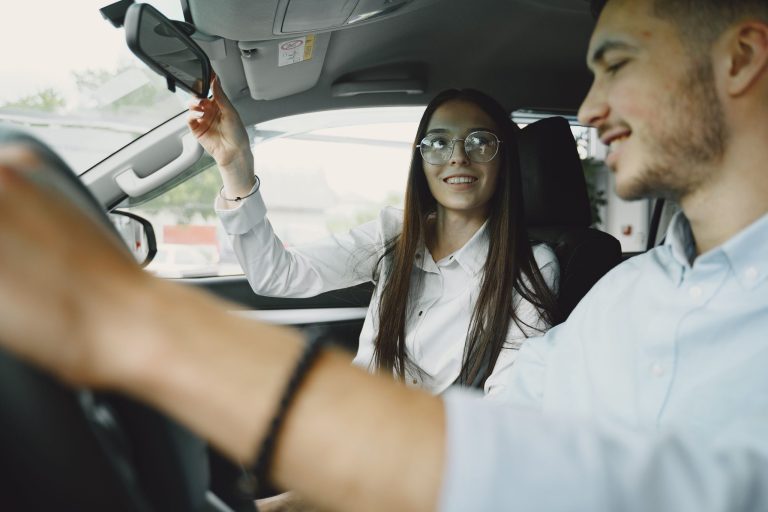


Some people put off learning to drive for years. Not because they cannot afford it, and not because they do not need a licence, but because the thought of being in charge of a car in traffic produces a genuine physical response — racing heart, tight chest, a strong urge to be anywhere else.
If that describes you, the first thing worth knowing is that you are in extremely large company. Driving anxiety is one of the most common reasons learners stall out partway through, and it affects adults returning to driving after a break just as often as it affects seventeen-year-olds.
The second thing worth knowing is that it responds very well to the right approach, and very badly to the wrong one.
Where the Anxiety Usually Comes From
Driving nerves rarely appear from nowhere. Most learners can trace them to one of a handful of sources.
A frightening experience as a passenger or driver. A crash, a near miss, or simply being in a car with a driver who scared them.
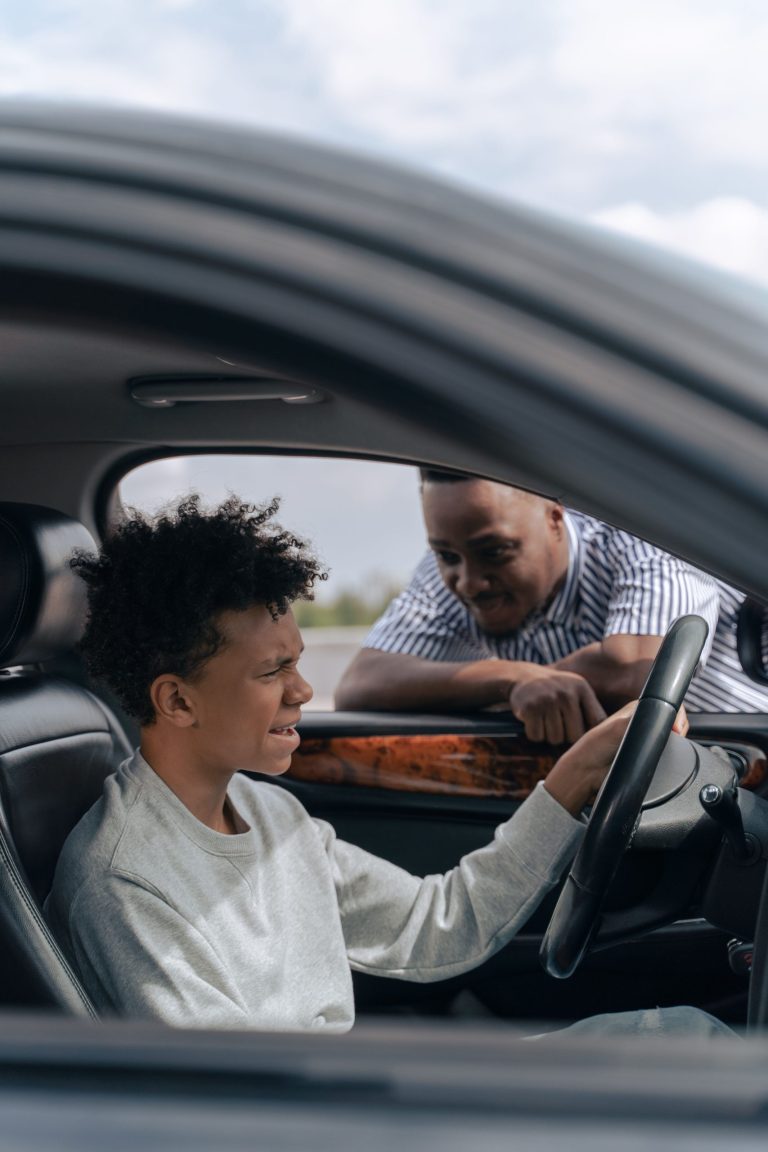
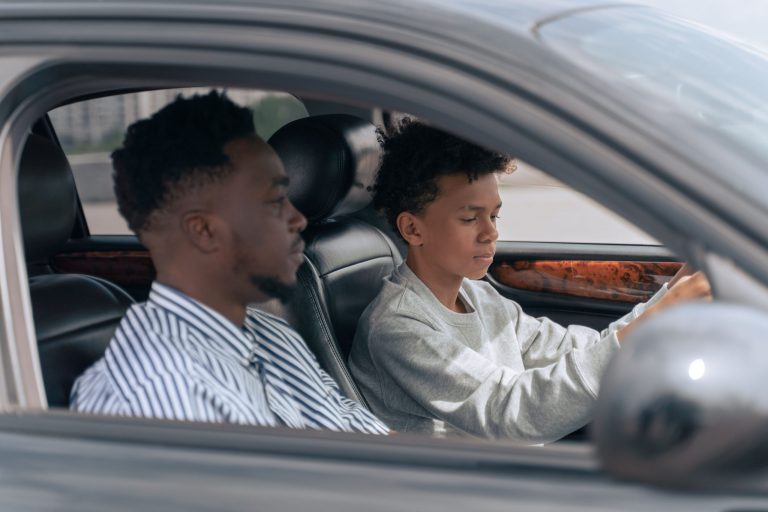
Being taught by a family member. This is the big one, and it is worth being blunt about. Parents and partners are often excellent drivers and terrible instructors. They gasp, they grab the door handle, they react rather than explain, and they carry a personal stake in the outcome that a professional does not. A learner whose first ten hours involved someone shouting “BRAKE!” has been taught that driving is dangerous and that they are bad at it.
This is not a criticism of parents. Supervising a learner is genuinely stressful when you have no dual controls and no training in how to teach.
General anxiety. For people who experience anxiety more broadly, driving offers an unusually rich set of triggers: loss of control, responsibility for others, unpredictability, and being observed.
Pressure and deadlines. A test booking looming, a job that requires a licence, family members asking when you will finally get it done.
What Does Not Work
“Just relax.” Nobody has ever relaxed because they were told to. It communicates that the anxiety is unreasonable, which adds embarrassment to fear.
Being thrown in the deep end. The idea that a nervous learner should be taken straight onto a busy road to “get over it” is both common and wrong. Overwhelming exposure without control tends to confirm the fear rather than extinguish it.
Pushing through a bad session. Continuing a lesson after a learner has become genuinely distressed teaches their nervous system that the car is a place where distress happens. Stopping early, calmly and without disappointment teaches the opposite.
Comparison. “Your sister had her licence at seventeen.” Nothing useful has ever followed that sentence.
What Actually Works
Graduated exposure with control
The evidence-based approach to any anxiety is gradual exposure at a level the person can tolerate, repeated until it becomes unremarkable, then a small step up.
In practice, that means starting on a genuinely empty street — the quiet residential pockets of Macquarie Fields and Glenfield on a weekday mid-morning are close to ideal — and staying there until it is boring. Boring is the goal. Boring is what the nervous system needs before it will accept a step up.
Then a slightly busier street. Then a 60 zone. Then a roundabout at a quiet time. Then the same roundabout at a busier time. Each step small enough that it produces mild discomfort rather than panic.
A learner who is escalated too fast goes backwards. A learner who is escalated at the right pace usually surprises themselves with how quickly they progress.
Dual controls change the psychology
This is more significant than most people expect. Knowing that the instructor has their own brake, and that the car genuinely cannot get away from you, removes the catastrophic scenario that anxious learners are constantly rehearsing.
Once the worst case is off the table, attention becomes available for actual learning.
Predictability
Anxiety thrives on uncertainty. A lesson that begins with a clear statement of what will happen — where you are going, what you will practise, and that you can stop at any time — removes a large share of the anticipatory dread.
Nervous learners should feel entitled to ask at the start of every lesson: what are we doing today, and what are we not doing today?
The right instructor
Temperament matters more than technical expertise for an anxious learner. What you need is someone who stays calm when you make a mistake, explains rather than reacts, and does not visibly tense up.
Practical detail: many learners are more comfortable with an instructor of a particular gender, for cultural reasons or simply personal preference, and there is nothing to apologise for in asking. Schools with both male and female instructors can accommodate this without fuss.
Breathing, properly
Not a platitude. When anxiety spikes, breathing becomes shallow and fast, which raises heart rate, which the brain reads as further evidence of danger.
The intervention that works is lengthening the exhale. Breathe in for four, out for six or seven. Longer exhales activate the parasympathetic nervous system and physically slow the heart. Practise it at home so it is available in the car.
Pulling over safely and taking sixty seconds to breathe is always allowed and always better than driving while panicking.
Reframing the Mistake
The belief underneath most driving anxiety is that a mistake equals a disaster.
In reality, the overwhelming majority of learner mistakes are trivial: stalling, taking a wrong turn, stopping too far from the line, indicating the wrong way. None of these are dangerous. Most are not even embarrassing to anyone but the learner.
Good instructors deliberately normalise mistakes rather than smoothing them over. A stall met with “that’s fine, that’s the clutch coming up a bit fast, try again” teaches something completely different from a stall met with silence and a sigh.
Test Day Anxiety Specifically
Even confident learners get nervous on test day. Some specific things help.
Drive for an hour beforehand. A warm-up burns off the initial adrenaline spike and means you arrive already in a driving rhythm rather than cold.
Use the car you know. Being assessed in an unfamiliar vehicle adds an entirely unnecessary variable.
Do a mock test first. Most test anxiety is fear of the unknown. Having already done a realistic simulated run on local routes removes most of the unknown.
Tell the officer you are nervous. They hear it every day. It costs you nothing and often results in a slightly gentler manner.
Reframe the stakes. A failed test is a delay, not a verdict. Roughly half of all candidates at this centre do not pass on a given attempt, and almost all of them get there.
The Long View
Anxious learners frequently become excellent drivers. The caution that makes learning uncomfortable — heightened threat awareness, reluctance to take risks, thorough checking — is genuinely protective once the basic skills are in place.
The confident seventeen-year-old who found it all easy is not necessarily the safer driver at twenty-two.
Learn at Your Own Pace
Road Users Driving School has built its local reputation largely on patient teaching. Students regularly single out instructors Ibrahim and Tasnuva for a calm, encouraging manner with nervous learners, and every lesson plan is built around the individual rather than a fixed syllabus. Male and female instructors are available, and all vehicles are dual-control with five-star ANCAP safety ratings.
If it has been on your list for years, a single zero-pressure introductory lesson is a low-stakes way to find out how it actually feels.
Book online or call 0411 309 031. Pick-up from Macquarie Fields, Glenfield and Ingleburn.