
The gap between booking a first driving lesson and actually sitting in the car is where most of the anxiety lives. People imagine being thrown into traffic on Victoria Road within ten minutes, or being judged for not knowing which pedal is which, or stalling repeatedly in front of a stranger who is silently despairing.
None of that is what happens. A first lesson is one of the gentlest hours in the whole learning process, and it is mostly about information gathering — for the instructor as much as for you.
Here is what the hour actually contains.
Before the Lesson
You need two things: a valid NSW learner licence, and your logbook if you are using the paper version. That is genuinely it. You do not need a car, insurance, or any prior experience.
Wear flat, comfortable shoes with a reasonably thin sole. Thick boots blunt your feel for the pedals, and thongs or heels are unsafe. Bring your glasses if you wear them for distance, and mention it if you have any condition that affects your driving — an instructor can adapt easily when they know in advance.
Eat something beforehand. Concentration on an empty stomach is worse than most people expect.
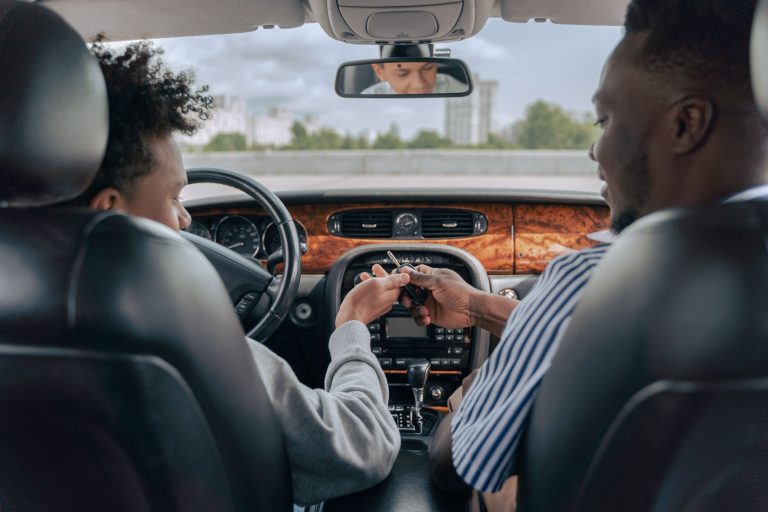
The Pick-Up
Most first lessons around here start with a pick-up from home. Instructors covering Macquarie Fields, Glenfield and Ingleburn will collect you from your door, which removes the awkward question of how you get to a lesson when you cannot yet drive.
The instructor drives to a quiet starting point. This is deliberate. Beginning in traffic would be overwhelming, and there is no benefit to it. The residential streets around Macquarie Fields and Glenfield on a weekday mid-morning are ideal — wide, low-speed and almost empty.
Use this drive. Ask questions. Tell them honestly how nervous you are, whether you have driven at all before, and whether there is anything specific worrying you. Instructors adapt the entire lesson to that conversation.
The First Fifteen Minutes: The Cockpit Drill
You swap seats and, before the car moves at all, work through a setup routine that will become second nature.
Seat position. Close enough to fully depress the pedals with a slight bend in the knee. Most beginners sit far too far back because sitting close feels strange.
Steering wheel and headrest. Wrists should rest on the top of the wheel with arms slightly bent when your shoulders are against the seat. The headrest centre should sit level with the top of your ears — it is a safety device, not a cushion.
Mirrors. Rear-view framing the back window; side mirrors set so you can just see a sliver of your own car at the inside edge. Instructors will show you how to minimise the blind spot rather than duplicating what the rear-view already shows.
Seatbelt, doors, handbrake, gear position.
This routine feels like a formality. It is not. A significant number of test-day faults trace back to poor seating position — a driver too far from the wheel cannot steer smoothly, and a driver who cannot see properly cannot observe properly.
The Controls Explained
Next, a walk through what everything does, without the car moving. Accelerator, brake, and — in a manual — the clutch. Indicators, wipers, lights, horn, hazards. Where the handbrake is and how it releases.
Nearly all first-time learners now start in an automatic, which removes clutch control from the first lesson entirely and lets you concentrate on steering, observation and speed. If you specifically want a manual licence, say so at booking, because it changes how the first few lessons are structured.
Moving Off for the First Time
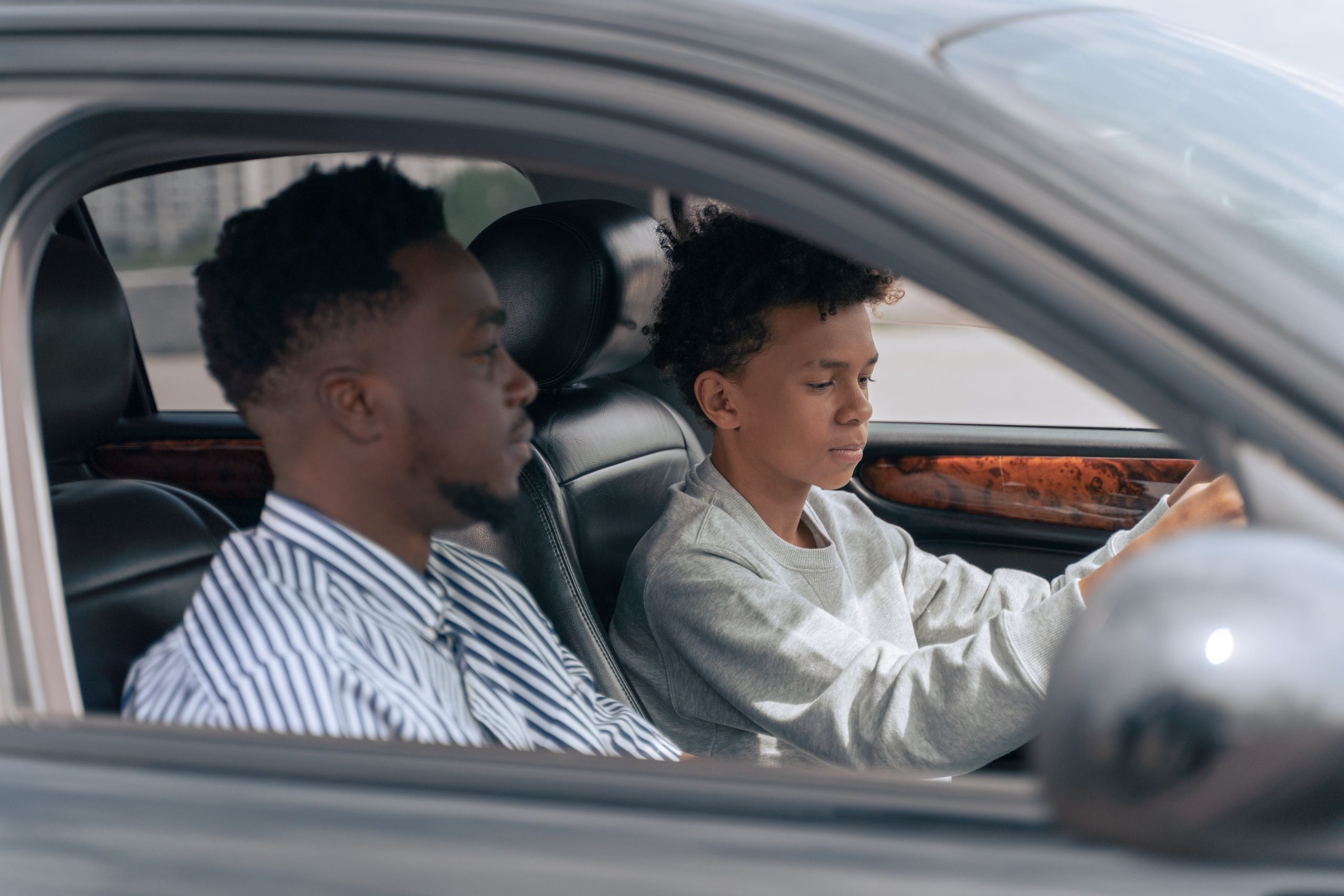
Then you drive. In a straight line, at walking pace, on an empty street.
The first two or three minutes are almost always the same for everyone: the car feels enormous, the steering feels far more sensitive than expected, and there is a strong instinct to over-correct. That passes within about ten minutes and then never comes back.
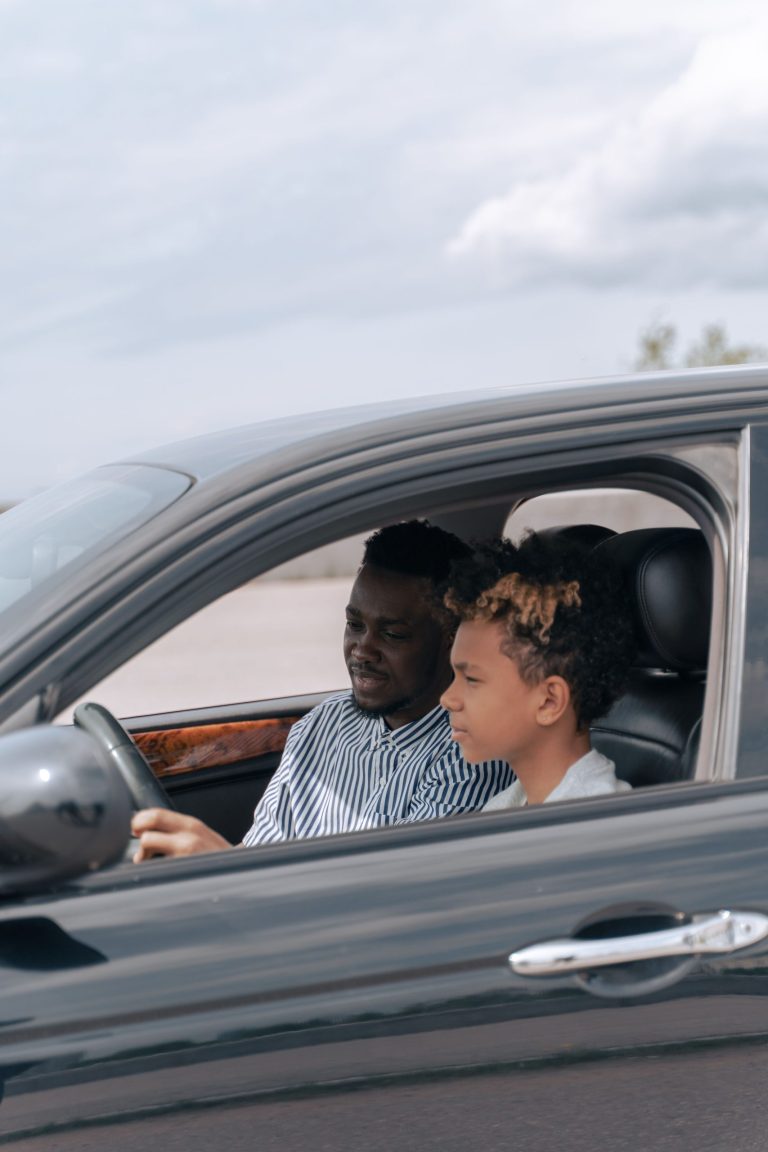
The instructor sits beside a full set of dual controls — their own brake and, in a manual, a clutch. This matters more psychologically than practically. Knowing that the car cannot actually get away from you allows you to relax, and relaxed learners learn several times faster than frightened ones.
Expect to spend most of the remaining time on: moving off and stopping smoothly, gentle left and right turns, steering technique, and using mirrors as a habit rather than an afterthought. Speeds stay low. There is no rush.
What the Instructor Is Really Doing
While you are concentrating on not hitting the kerb, they are assessing a handful of things that will shape your whole lesson plan.
How quickly do you translate an instruction into an action? Are you naturally cautious or naturally bold — both need different corrections? Do you steer with your hands or your whole upper body? Where do your eyes go, and how often do they leave the road? How do you respond when something surprises you?
That last one is the most informative. The way a learner reacts to a small surprise in lesson one predicts a great deal about how they will handle pressure on test day.
This is why an introductory lesson is priced and framed as an assessment session rather than a standard lesson. The output is a customised plan, not just an hour of driving.
Things That Will Probably Happen, and Are Fine
You will stall, if you are in a manual. Everybody does. It is a mechanical consequence of releasing the clutch too fast, not a character flaw.
You will drift toward the kerb. Almost universal, and it is a gaze problem rather than a hands problem. You steer where you look, so looking at the kerb steers you into it. Instructors fix this by getting you to look much further ahead.
You will forget to indicate. Repeatedly. It becomes automatic after a few hours.
You will be exhausted afterwards. An hour of first-lesson concentration is genuinely tiring. That fades quickly as the basics move from conscious effort to habit.
The Debrief
The last few minutes are usually a conversation on the way home. What went well, what to work on, and what comes next. A good instructor will be specific — “your observation at intersections was strong, we need to work on steering smoothness” — rather than generically encouraging.
They will also tell you honestly how many lessons they think you need, which varies enormously between individuals and depends heavily on how much supervised private practice you will be doing alongside.
What Comes Next
After a first lesson, most learners follow one of two paths. Some book a regular weekly or fortnightly lesson to build steadily. Others take a handful of lessons early to establish good habits, then do the bulk of their 120 hours with a parent, returning for structured lessons later to claim the 3-for-1 logbook credit and prepare for the test.
Either works. The one approach that reliably does not work is doing nothing for four months and then trying to compress everything into the weeks before a test booking.
Start With a Zero-Pressure First Lesson
Road Users Driving School offers a one-hour introductory lesson for first-time students, designed purely to assess where you are and build a plan around it. Our instructors — including Ibrahim and Tasnuva — are known locally for a calm, patient approach with nervous beginners, and all lessons run in modern dual-control vehicles.
Book your introductory lesson or call 0411 309 031. Pick-up and drop-off from Macquarie Fields, Glenfield and Ingleburn.