
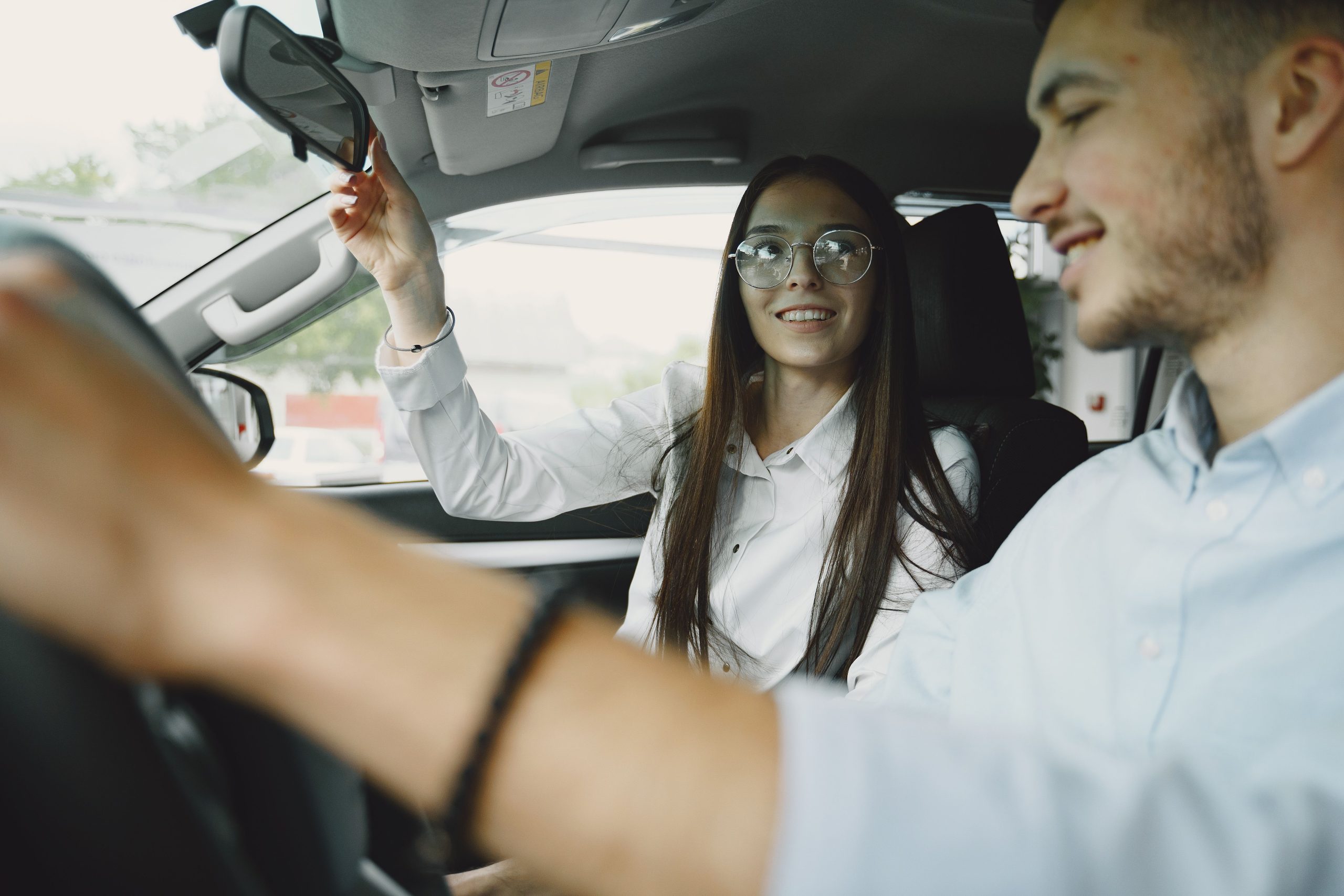
Parking is the manoeuvre learners dread most and, curiously, the one that responds fastest to structured practice. Reverse parallel parking has a reputation as a dark art. It is not. It is a fixed sequence of reference points that works identically every single time, and most learners go from panic to competence in two or three focused sessions.
What they usually lack is not talent. It is somewhere sensible to practise.
The Practice Location Problem
Almost every learner tries to practise parking in one of two unhelpful places. Either they practise on a busy shopping centre car park on a Saturday, where impatient drivers queue behind them and the pressure makes everything worse, or they practise outside their own house, where the same parked cars and the same kerb produce a driver who can only park in one specific spot.
Effective parking practice needs three things: low traffic, varied spaces, and repetition without an audience.
Building a Practice Circuit Around Macquarie Fields
Stage one: an empty car park, off-peak
Start where there is nothing to hit. The large car parks around the Glenquarie Town Centre and the various sporting and community facilities across Macquarie Fields and Ingleburn are close to deserted early on a Sunday morning or on a weekday evening after closing.
Empty bays let you practise the mechanics without consequences: how far to turn the wheel, what the mirrors show at each stage, how the car pivots. Use two bays with an empty one between them, then narrow the gap as you improve.
Reverse-into-a-bay parking is worth learning properly here too. It is safer than nose-in parking in real life, because you exit forward with full visibility, and it uses the same steering principles as parallel parking.
Stage two: quiet residential streets with real parked cars
This is the essential middle step, and the one most learners skip.
The residential streets across Macquarie Fields, Glenfield and Ingleburn provide exactly the environment a test requires: real vehicles, real kerbs, real driveways you must not block, and occasional passing traffic. On a weekday mid-morning these streets are quiet, because most residents have taken their cars to work — leaving convenient gaps.
Practise on different streets each session. Kerb heights vary, road cambers vary, and a learner who has only parked on one street has memorised a location rather than learned a skill.
Stage three: near the test centre, at test times
Final stage. Practise on the roads around Victoria Road and the surrounding streets, at the time of day your test is booked. This is where the manoeuvre has to work under mild pressure with traffic present.
The Reverse Parallel Park, Broken Down
The sequence below works in any car once you have identified your own reference points. The specific points vary slightly by vehicle, which is one reason testing in the same car you practised in matters.
1. Choose the space. You need roughly one and a half times your car’s length. Learners consistently overestimate how much space they need and pass up perfectly good gaps.
2. Signal and position. Indicate left, then pull up alongside the vehicle in front of the space, about a metre out, with your rear bumpers roughly aligned.
3. Full observation. This is where marks are lost, not on the steering. Check mirrors, check over both shoulders, and check for pedestrians behind. Officers want to see comprehensive observation before the car moves and continuing observation throughout.
4. Reverse slowly, then turn. Begin reversing straight. When your reference point aligns — commonly when the rear of the car in front appears in a specific position in your left mirror — turn the wheel fully to the left.
5. Watch the angle. As the car swings in, watch the kerb in your left mirror and the front of your car relative to the vehicle ahead. When your car reaches roughly 45 degrees to the kerb, straighten the wheel.
6. Reverse straight, then swing in. Continue back until your front bumper will clear the car ahead, then turn the wheel fully right to bring the front in.
7. Straighten and adjust. Centre the wheel, adjust forward or back to sit centrally in the space, and finish parallel and close to the kerb.
You are permitted to make adjustments. A park completed with one correction and good observation scores better than a single-movement park done blind.
The Three Faults That Cost Marks
Insufficient observation. By far the most common. Learners become so absorbed in the geometry that they stop looking around. Reversing without checking behind is a serious fault regardless of how neat the final position is.
Touching or mounting the kerb. Usually caused by turning too late or reversing too fast. Slow the car down — the steering has more time to work.
Finishing too far from the kerb. Generally means the initial turn came too early or the starting position was too far out. If you end up wide, pull out and start again rather than shuffling repeatedly.
The Speed Principle
If there is one universal fix for parking problems, it is this: go slower and steer faster.
Most learners reverse too quickly and turn the wheel too gradually, which means the car has travelled past the correct point before the steering has taken effect. Creeping at genuine walking pace while turning the wheel briskly gives you far more control and far more time to observe.
A car at walking pace is also a car you can stop instantly if something appears behind you.
Three-Point Turns
Often assessed alongside parking, and governed by the same principles. Choose a location with clear sightlines in both directions, observe thoroughly before each of the three movements, move slowly, and use the full width of the road. You are not penalised for taking five movements instead of three if the space is genuinely tight — you are penalised for hitting the kerb or failing to observe.
The quiet cul-de-sacs across Macquarie Fields and Glenfield are ideal practice ground, and there are plenty of them.
Hill Starts
The other manoeuvre worth building into a parking practice session, because south west Sydney has enough gradient to make it relevant. In an automatic, the technique is straightforward — hold the brake, release, apply throttle promptly. In a manual, it requires coordinating the handbrake with the clutch bite point, and it is the single most common cause of stalling on tests.
Find a moderate slope and repeat it twenty times in a row. It is dull and it works.
How Long This Actually Takes
Most learners who practise deliberately can reverse parallel park reliably within three or four focused sessions of thirty to forty minutes. Learners who attempt it occasionally at the end of otherwise unrelated drives can take months and never quite trust it.
The difference is concentration of practice. Twenty repetitions in one session teaches more than one repetition across twenty sessions.
Get the Reference Points Right the First Time
Parking is a skill where a good instructor saves an enormous amount of time, because most of the difficulty is in identifying reference points that a self-taught learner has no way of knowing. Road Users Driving School instructors are regularly commended by local students for clear, repeatable parking techniques — and lessons run in the same dual-control vehicles you can hire for the test itself.
Book a lesson online or call 0411 309 031. Pick-up from Macquarie Fields, Glenfield and Ingleburn.