
Twenty hours of night driving is the requirement most learners underestimate and then panic about. It is a fifth of the total logbook obligation, it cannot be substituted with bonus credits, and it can only be completed between sunset and sunrise — which in a Sydney summer leaves a fairly narrow window before most families want to be in bed.
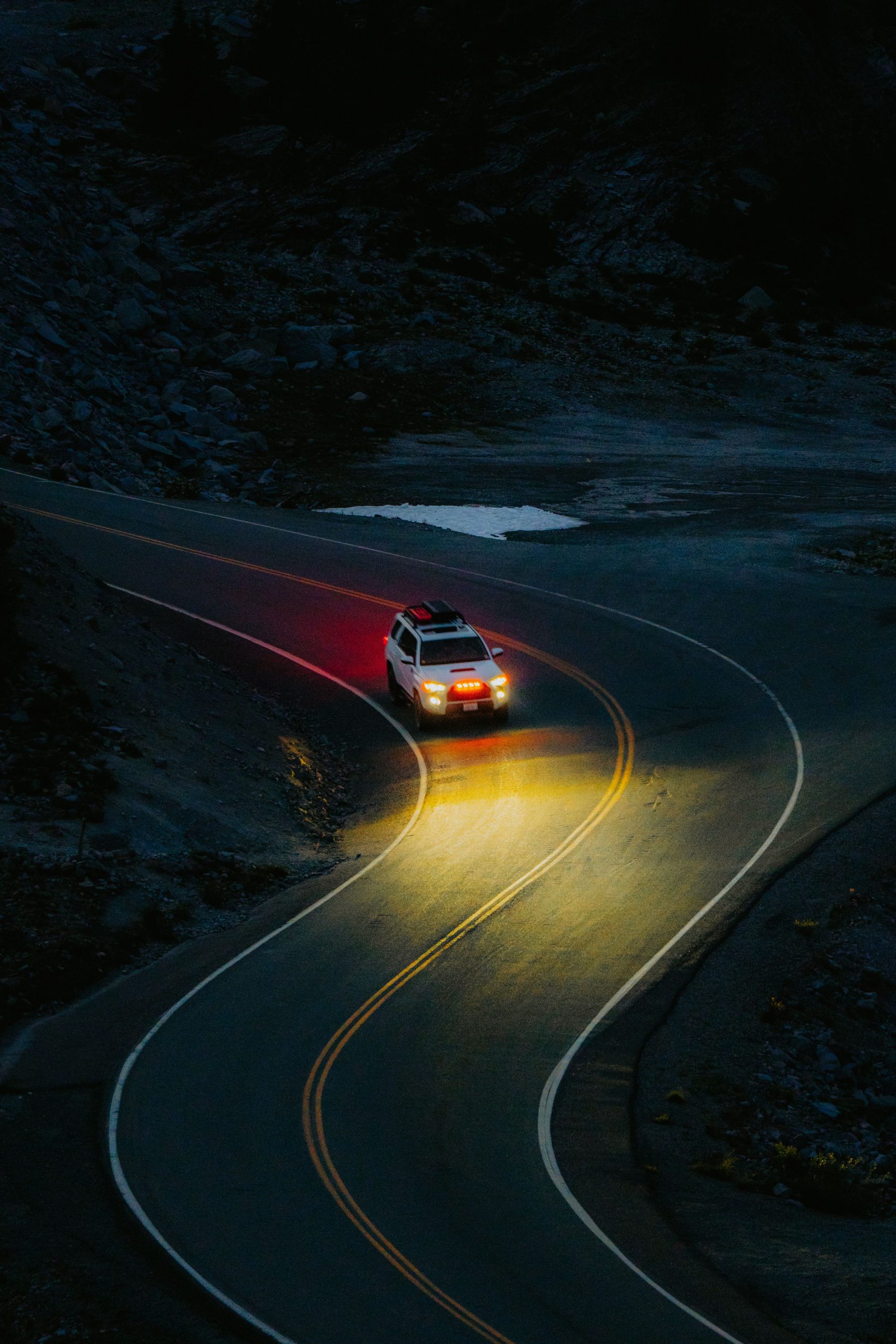
It is also, arguably, the most valuable twenty hours in the whole logbook. Driving at night is not daytime driving with the lights on. It is a genuinely different task, and the crash statistics for newly licensed drivers after dark make the case better than any argument could.
Here is how to get the hours done properly around Macquarie Fields, and what to actually practise while you are out there.
What Counts, and What Does Not
Night driving means driving between sunset and sunrise. Dusk does not count until the sun is actually down, and pre-dawn driving counts right up until sunrise.
The catch that trips up a lot of learners: if you take a structured lesson with an instructor at night, you receive the full three-hour logbook credit under the 3-for-1 scheme, but only the one hour you genuinely drove counts toward your night total. The two bonus hours are recorded as day hours. You cannot shortcut the night requirement through lesson credits.
Plan accordingly. Twenty night hours means twenty real hours behind the wheel in the dark.
Use Winter
The single most effective piece of planning advice is seasonal. In the depths of a Sydney winter, sunset arrives around five in the afternoon. That means an ordinary drive home from work, from TAFE, from training or from a relative’s place is night driving.
In midsummer, sunset drifts past eight o’clock, which pushes night practice into genuinely late hours and makes it far harder to sustain.
If you get your learner licence in spring, the smart move is to start accumulating night hours as soon as the evenings begin closing in, rather than treating them as a task for later. Learners who front-load winter night driving almost never have to scramble.
Where to Practise, in Order of Difficulty
Stage one: lit residential streets
Start on well-lit local streets you already know in daylight. The point of the first few hours is calibration — discovering how much less you can see, how differently distance reads, and how much longer it takes to identify a hazard.
The residential grid around Macquarie Fields and Glenfield works well because you already have a mental map of it. Driving a familiar street in the dark isolates the lighting variable from the navigation variable.
Stage two: local roundabouts after dark
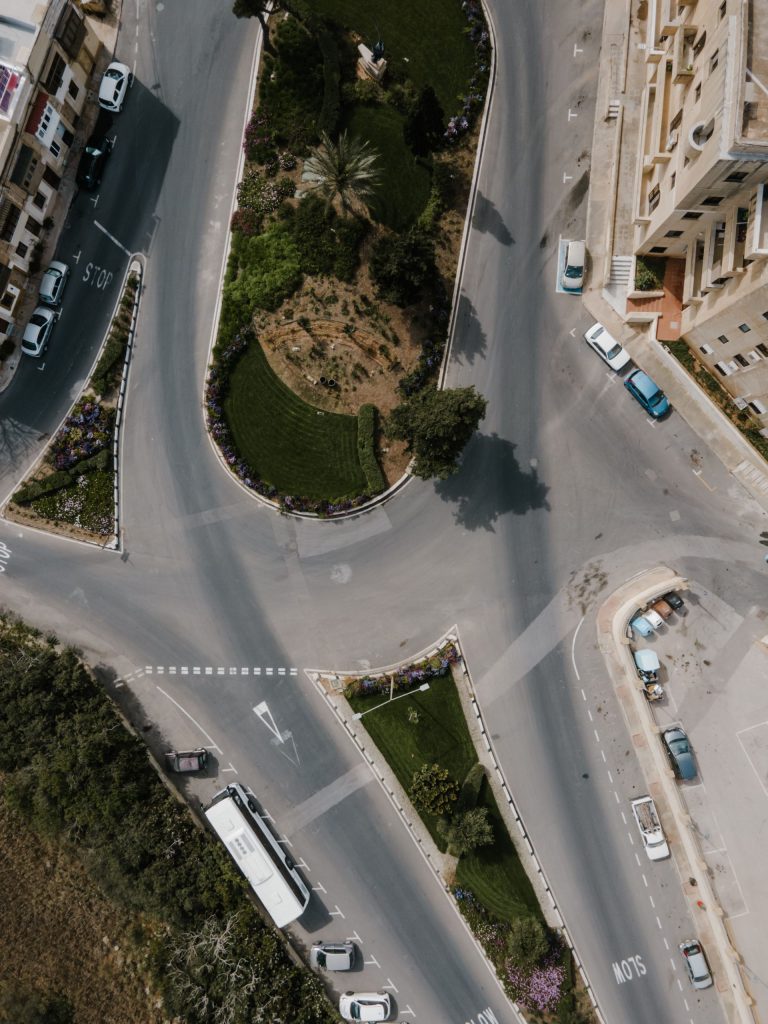
This is where night practice in this area earns its keep. The roundabouts you have been drilling in daylight look and behave differently at night. Approach speeds are harder to judge, the give-way lines are less obvious, and other drivers’ indicators become your main source of information — which is a problem, because plenty of them do not use indicators.
Work through the same roundabouts you have practised in daylight until the darkness stops changing your behaviour.
Stage three: arterial roads and headlight glare
Move onto the busier local roads, and then the arterial routes connecting Macquarie Fields to Ingleburn, Liverpool and Campbelltown. Here you meet the two defining challenges of night driving: oncoming headlights and reduced sight distance at higher speeds.
The technique for oncoming high beams is worth drilling explicitly. Do not stare at them. Shift your gaze down and to the left, using the left edge line or kerb as a steering reference until the vehicle passes. Staring at oncoming lights destroys your night vision for several seconds afterwards, which at 80 km/h is a very long way.
Stage four: rain at night
The hardest common condition, and the one most learners have never experienced with a supervisor. Wet road surfaces reflect and scatter light, lane markings disappear, and depth perception degrades badly.
You cannot schedule rain, so the rule is opportunistic: when it is raining after dark and you have a supervisor available, go out. Half an hour of supervised wet night driving is worth several hours of clear-weather practice.
What to Actually Work On
Headlight discipline. Know where your high beam control is without looking. High beams are for unlit roads with no vehicle ahead and none approaching. You must dip them well before an oncoming vehicle reaches you, and when following another car. Learners often either never use high beam at all — losing useful sight distance — or forget to dip and dazzle someone.
Speed reduction. The core principle of night driving is that you should be able to stop within the distance you can see illuminated. On low beam, that distance is considerably shorter than most drivers assume. Driving at the posted limit on an unlit road at night can be objectively unsafe even though it is legal.
Following distance. Extend it. The three-second rule that works in daylight should stretch to four or more at night, because you have less warning of what the vehicle ahead is reacting to.
Instrument dimming. A brightly lit dashboard constricts your pupils and reduces what you can see outside. Dim the instrument panel and the infotainment screen.
Wildlife and pedestrians. The outer edges of the south west Sydney suburbs still produce the occasional animal on the road, and pedestrians in dark clothing are effectively invisible until they are close. Scan the road edges, not just the lane.
Fatigue. Night driving is more tiring than daytime driving even over short distances, because the visual system is working harder. Keep night sessions shorter than your daytime ones, and never log night hours when you are already tired from a full day.
A Practical Scheduling Pattern
Twenty hours over six winter weeks is about three and a half hours a week. That is achievable with two sessions:
- A weeknight drive of around an hour, attached to something you were doing anyway — collecting someone, a shopping run, driving home from an activity.
- A longer weekend evening session of ninety minutes to two hours, aimed at a specific skill: roundabouts one week, arterial roads the next, an unfamiliar suburb the week after.
Log the hours the same night. Night entries are the ones most often reconstructed inaccurately, because they blur together.
Why This Matters Beyond the Logbook
Newly licensed drivers are substantially over-represented in night-time crashes. The reasons are not mysterious: reduced visibility, higher speeds on emptier roads, fatigue, and — for young drivers specifically — a higher likelihood of carrying passengers and driving late.
It is worth noting that P1 drivers in NSW face a night-time passenger restriction for exactly this reason. Between 11pm and 5am, a P1 driver under 25 may generally carry only one passenger under the age of 21. That rule exists because the combination of night driving, inexperience and peer passengers is measurably dangerous.
The twenty supervised night hours are the counterweight. They are the reason your first solo drive after dark is a familiar experience rather than a novel one.
Book a Night Lesson
Road Users Driving School runs lessons early, late and on weekends, which makes night sessions straightforward to schedule around work and study. Our instructors take learners through the local roundabout network, the arterial routes and the tricky lighting transitions around Macquarie Fields after dark, with pick-up and drop-off from Macquarie Fields, Glenfield and Ingleburn.
Book a night lesson online or call 0411 309 031.