
Sydney rain does not arrive politely. It turns up as a wall of water on a February afternoon, dumps enough in twenty minutes to flood a gutter, and leaves the roads greasy for the rest of the day. For a learner who has done a hundred hours in dry weather, that first heavy downpour behind the wheel is genuinely alarming.
It should not be. Wet weather driving is a set of learnable adjustments, and the learners who handle it well are simply the ones who practised it on purpose rather than encountering it by accident.
The Most Dangerous Rain Is the First Rain
Counter-intuitively, the highest-risk period is not during a heavy downpour. It is the first ten to twenty minutes of light rain after a long dry spell.
Road surfaces accumulate oil, rubber and dust. A light rain lifts that residue and suspends it on the surface without washing it away, producing something close to a soap film. Grip drops dramatically while the road still looks only slightly damp.
After a period of sustained heavy rain, that contamination has largely been flushed off, and grip — while still reduced — is more predictable.
The practical rule: treat a light shower after a dry fortnight with more caution than a steady downpour after two days of rain.
The Four Adjustments
1. Double your following distance
The three-second rule becomes a six-second rule. Braking distances on a wet road can be roughly double what they are on a dry one, and every other driver around you is subject to the same physics.
This adjustment also buys you something less obvious: distance from the spray of the vehicle ahead. Following closely behind a truck in heavy rain puts you in a cloud of water where you can see almost nothing.
2. Slow down before you need to
The posted speed limit is a maximum for ideal conditions, not a target for all conditions. Driving at 80 in heavy rain on a road signed for 80 can be both legal and unsafe.
More importantly, do all your slowing early. Braking, steering and accelerating should each happen gently and, as far as possible, one at a time. Braking hard while turning is what puts a car into a skid.
3. Look further ahead
Wet conditions reduce the time you have to react, so you need more warning. Lift your gaze further down the road and read the traffic several vehicles ahead rather than just the bumper in front.
4. Turn your lights on
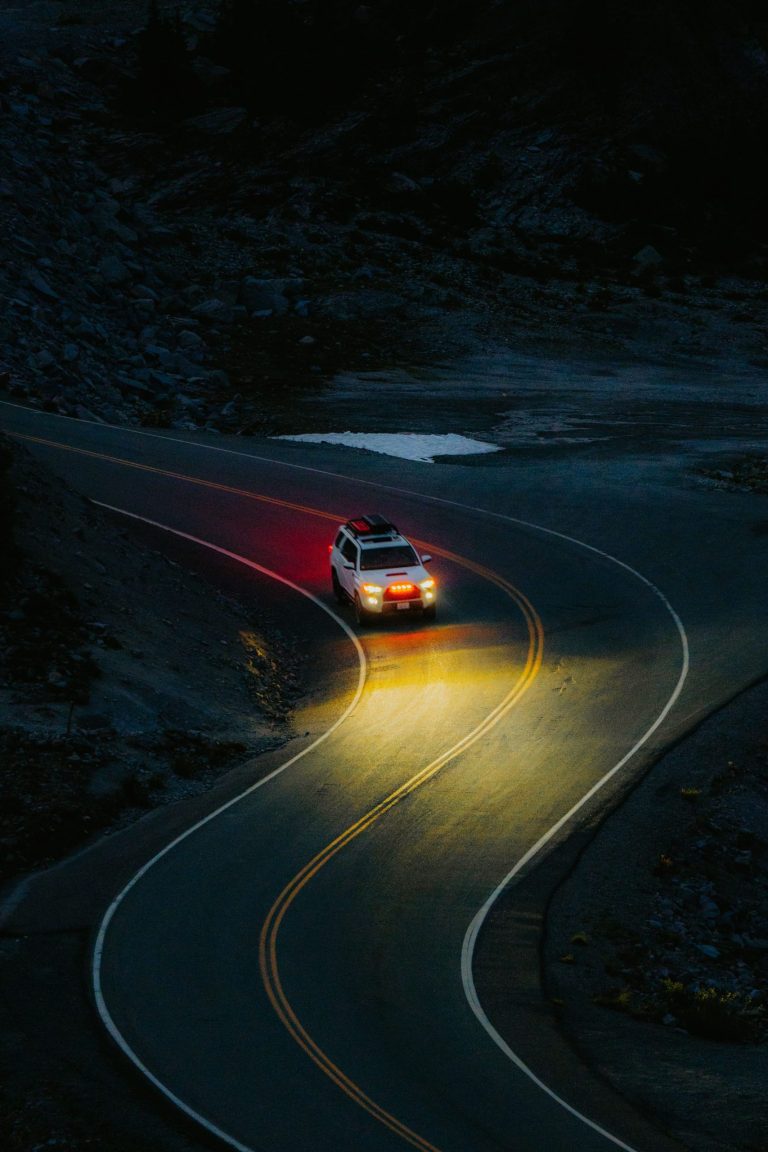
In New South Wales, headlights are required in hazardous weather conditions that reduce visibility. Beyond the legal point, low beam headlights make your car dramatically more visible to others in grey, spray-filled conditions. Daytime running lights are not a substitute, because in many vehicles they do not illuminate the tail lights.
Do not use rear fog lights in ordinary rain if your vehicle has them — they dazzle the driver behind.
Aquaplaning: What It Is and What to Do
Aquaplaning happens when water builds up faster than the tyres can channel it away, and the tyre lifts onto a film of water. Steering and braking effectively stop working.
You will feel it as a sudden lightness in the steering, and the engine may rev slightly as the wheels lose load.
The correct response is counter-intuitive and worth rehearsing mentally in advance:
- Do not brake.
- Do not steer sharply.
- Ease off the accelerator gently.
- Hold the wheel straight and steady.
- Wait for the tyres to regain contact, which usually takes a second or two.
The instinctive reaction — stamping on the brake and turning — is exactly what turns a brief loss of grip into a spin.
Prevention matters more than recovery. Aquaplaning risk rises steeply with speed and with worn tyres. Tread depth is what channels water out from under the tyre; a tyre at the legal minimum has a fraction of the wet performance of a new one.
Standing Water and Flash Flooding
South west Sydney gets localised flash flooding in intense summer storms. Low points in roads, dips near creek crossings and poorly draining intersections can hold surprising amounts of water within minutes.
The rule is simple and absolute: do not drive through floodwater. It is impossible to judge depth from a driver’s seat, you cannot see whether the road surface beneath has washed away, and a relatively shallow flow can float a car. A large share of flood fatalities in Australia involve vehicles.
Turn around. There is always another route.
For ordinary puddles and pooled water at the edge of a road, slow down before you reach them, avoid sudden steering, and be aware that water on one side of the car only can pull the steering. After driving through standing water, test your brakes gently at low speed — wet brakes can be temporarily less effective.
Demisting: The Skill Nobody Teaches
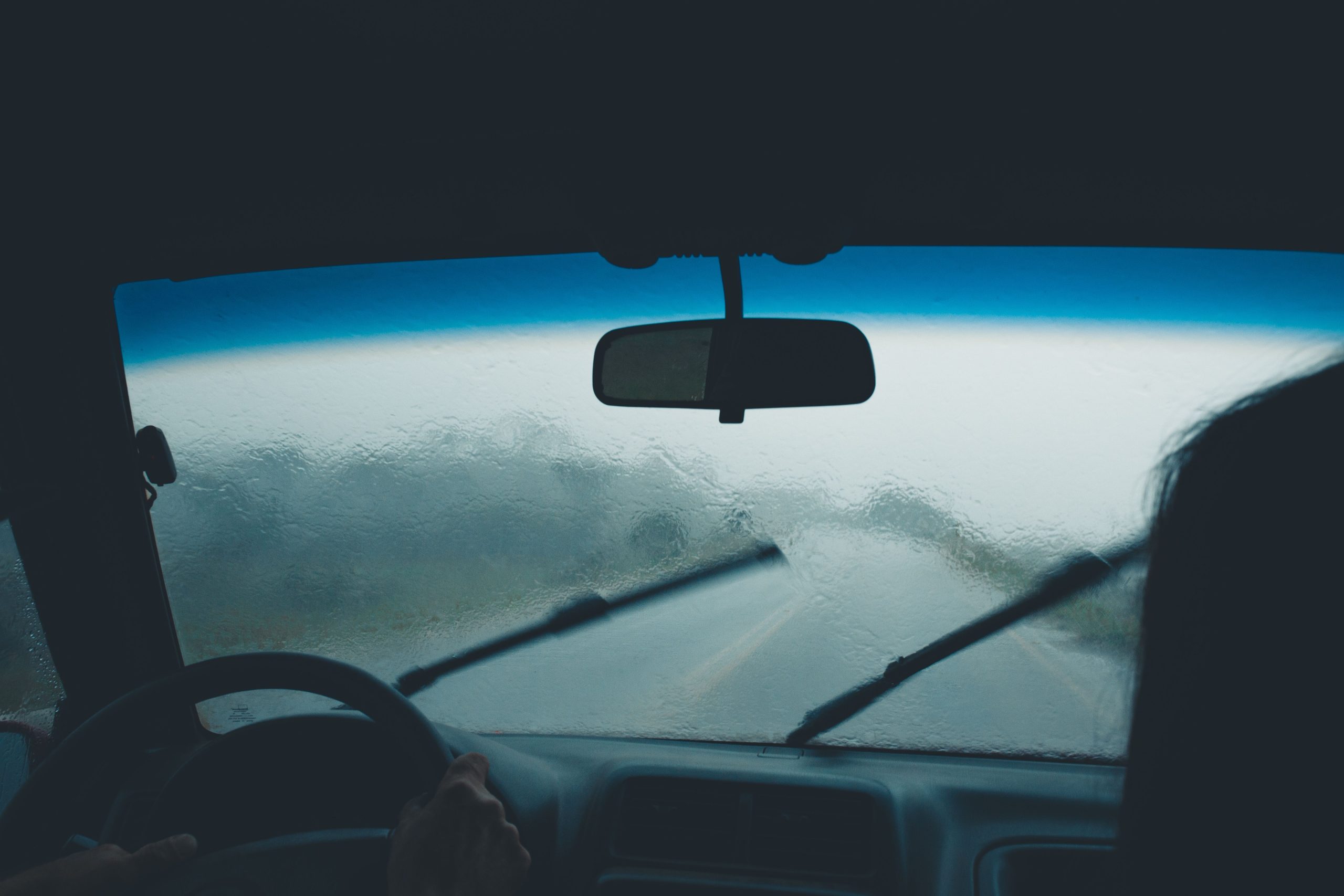
Here is a situation almost every learner meets and almost none has practised. You get into the car in the rain, everyone’s clothes are wet, and within two minutes the windscreen fogs so badly you cannot see.
Panicking and wiping the glass with your sleeve makes it worse — it smears and it takes your hands off the wheel.
The fix, in order: turn the fan to high, direct airflow to the windscreen, turn on the air conditioning (it dehumidifies, regardless of temperature), turn on the rear demister, and if the fog persists, open a window slightly to exchange the humid air.
Learn where these controls are on the car you will be tested in, so you can operate them without looking. This is a genuine safety skill and it takes five minutes to learn.
Wipers and Visibility
Wiper blades degrade in the Australian sun and most people replace them years later than they should. A smearing blade in heavy rain is a serious visibility problem. If the wipers leave streaks or judder, replace them — they are inexpensive.
Keep the washer reservoir full. The film of road grime that builds up in wet conditions can be worse for visibility than the rain itself.
Practising in the Rain on Purpose
You cannot schedule weather, so wet weather practice has to be opportunistic. The habit worth building is this: when it rains and you have a supervisor available, go out.
Thirty minutes of supervised driving in genuine rain is worth several hours of dry-weather practice, because it is the only way to calibrate how the car actually feels with reduced grip.
Start on quiet local streets, not arterial roads. Practise gentle braking and note how much longer it takes. Practise a roundabout in the wet and feel how much earlier you need to slow. Then progress to busier roads once the basics feel manageable.
If It Rains on Test Day
Driving tests generally proceed in rain. They are only postponed in genuinely extreme conditions.
If your test is in the wet, the testing officer is not expecting the same speeds and margins as a dry day. They are expecting appropriate adjustment — greater following distance, earlier braking, moderate speed, headlights on. A candidate who drives at the posted limit with a two-second gap in heavy rain is demonstrating poor judgement, whatever the sign says.
Adjusting sensibly to conditions is a positive, not a hedge.
Book a Wet Weather Lesson
Road Users Driving School runs lessons across Macquarie Fields, Glenfield and Ingleburn in all conditions, with modern dual-control vehicles carrying five-star ANCAP safety ratings. If rain is forecast and you want to use it, get in touch — wet weather sessions are among the most useful hours a learner can spend.
Book a lesson online or call 0411 309 031.