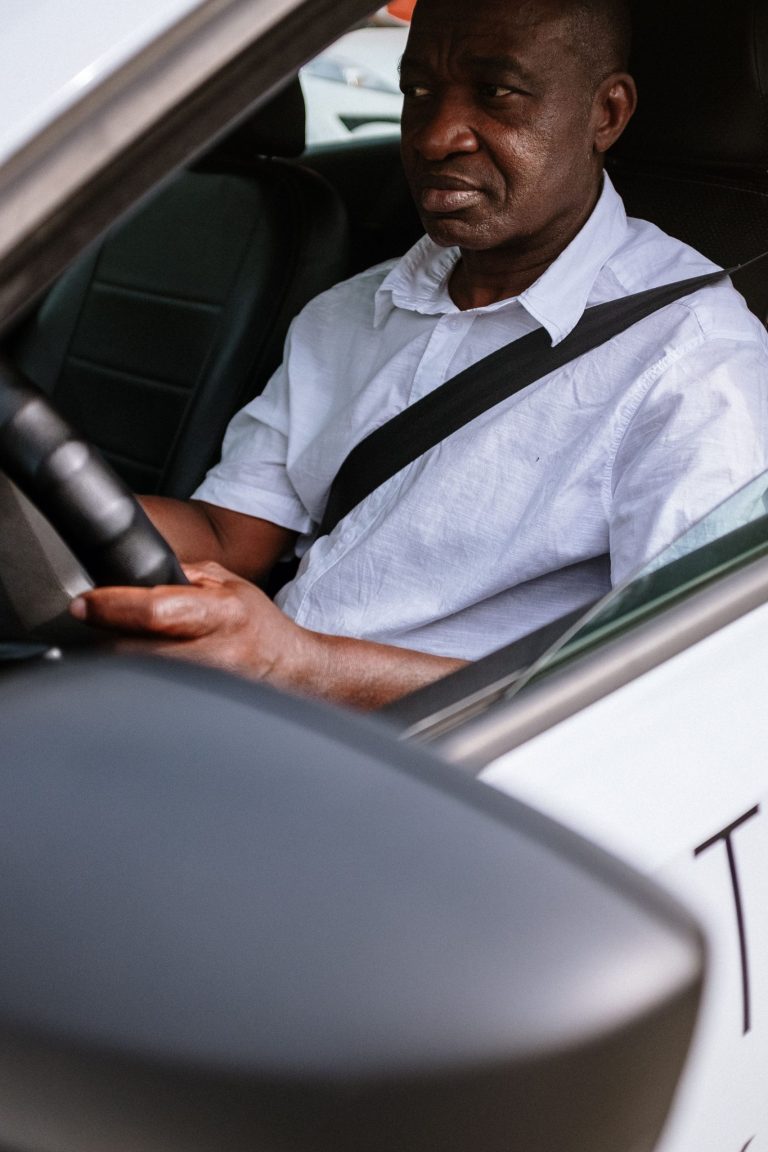


There is one moment in a driving test that ends it instantly and unambiguously: the testing officer reaches for the wheel or the brake. No discussion, no accumulated point total, no benefit of the doubt. The assessment is over.
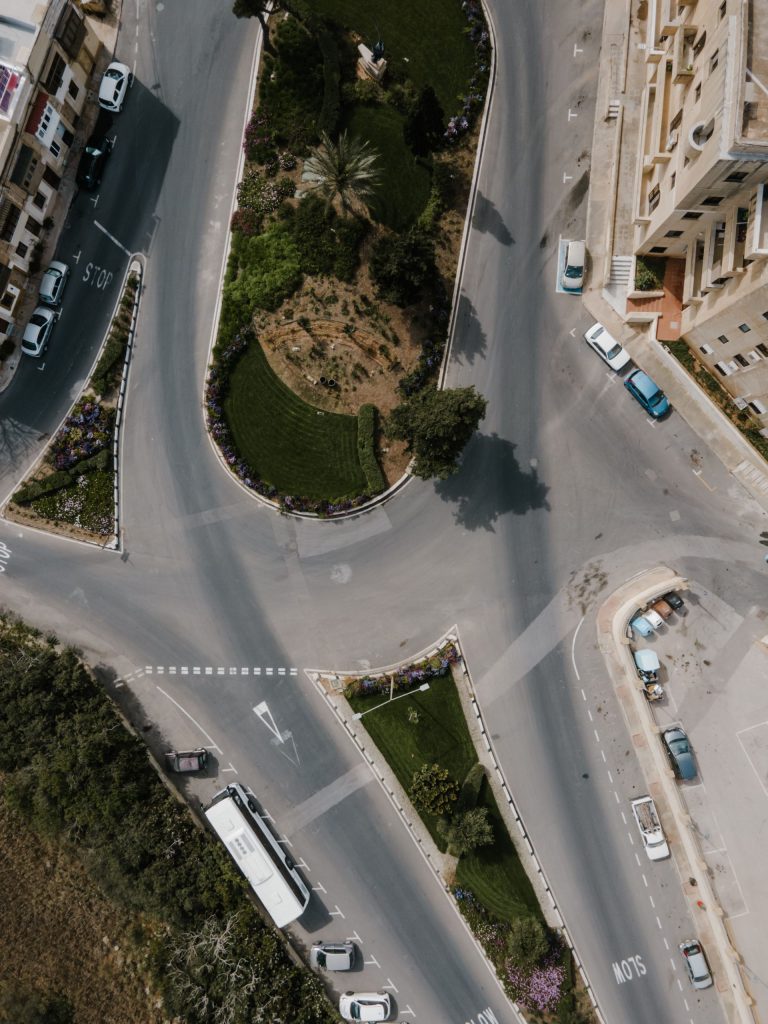
In the area covered by the Macquarie Fields testing centre, that intervention most often happens in one specific situation — a learner pulling out from an unsignalised T-junction into a gap that was not big enough.
It is worth understanding why this particular manoeuvre is so lethal to test results, because the reason is not what most learners assume.
Why T-Junctions Are Harder Than Traffic Lights
The test routes running out of Macquarie Fields through Ingleburn are unusual in their composition. They are heavy on roundabouts and light on traffic signals — one documented local route covers around eleven kilometres with more than a dozen roundabouts and only a handful of signalised intersections.
That distribution means the intersections you meet are overwhelmingly ones where you make the decision. There is no green light telling you it is your turn. You look, you judge, you commit.
Judgement is the hardest thing to teach and the last thing to develop. A learner can master clutch control in a fortnight. Reliable gap selection takes months, because it depends on accumulated exposure to how fast approaching traffic actually closes.
The Anatomy of a Bad Decision
Watch a learner misjudge a T-junction and the failure almost always follows the same sequence.
They stop too far back. Stopping behind the stop line but without creeping to a position with an actual view means they cannot see far enough up the road. From a poor vantage point, a car 200 metres away and a car 80 metres away look similar.
They look at the wrong thing. Novices look at the nearest vehicle. Experienced drivers look at the gap behind the nearest vehicle, because that is the space they will be entering.
They hesitate, then rush. Several usable gaps pass while the learner deliberates. Pressure builds — from traffic behind, from the sense that they are taking too long, from the officer’s presence. Then they take a marginal gap out of embarrassment rather than judgement.
That last step is the killer, and it is emotional rather than technical. The learner does not misjudge the gap. They know it is tight and go anyway because waiting feels worse.
They emerge slowly. Having chosen a marginal gap, they then pull out gently — which converts a tight gap into no gap at all. The approaching driver brakes, the officer’s hand moves, and the test ends.
The Fix, Step by Step
Position yourself to see
Stop at the line, then if your view is obstructed, creep forward slowly to a position where you can actually see up both directions. Creeping is a legitimate, expected part of the manoeuvre. Sitting blind behind a parked car and hoping is not.
Look right, left, right — and mean it
In left-hand traffic, the immediate threat comes from your right. But a genuine scan covers both directions and returns to the right immediately before you move, because the situation you assessed three seconds ago has changed.
Officers are watching your head, not your eyes. A deliberate, visible head movement is what registers.
Judge the gap in seconds, not metres
Distance is a poor guide because it does not account for speed. Time is reliable. Pick a fixed reference — a pole, a driveway, a line marking — and count how long the approaching vehicle takes to reach it.
As a working guide for a learner on a 60 km/h road, you want a gap of around six to seven seconds to turn left, and eight or more to turn right across traffic. These are conservative numbers, and conservative is exactly right for a test.
Practise the counting out loud with a supervisor. It converts a vague feeling into a number, and numbers can be assessed.
Commit decisively
Once you have chosen the gap, go. Not aggressively, but positively — enough throttle to reach the flow of traffic promptly. A hesitant emergence is far more dangerous than a brisk one, because it eats the margin you calculated.
This is the point where a dual-control car earns its cost during practice. Learners can rehearse committing decisively knowing there is a backstop, which is exactly how confidence gets built.
Learn to wait comfortably
The skill nobody names: being at peace with waiting. If there is no safe gap, there is no safe gap. A queue behind you is not your problem. Excessive hesitation is marked as a fault, but “excessive” means letting genuinely safe gaps pass — not declining unsafe ones.
Tell yourself in advance that you will wait as long as it takes. Having decided that before you arrive removes the social pressure that causes bad decisions.
Merging: The Same Problem at Higher Speed
Everything above applies to merging, with less time to do it.
The arterial roads around Ingleburn and the motorway connections nearby require merges at 70, 80 and sometimes 100 km/h. The universal learner error here is merging too slowly. A driver who enters a 100 km/h stream at 70 forces everyone behind them to brake and is a genuine hazard.
Use the full length of the entry lane to match the speed of the traffic you are joining. Check the mirror, then perform an actual head check into the blind spot, indicate, and move across in one smooth movement.
New South Wales has two distinct merging rules and learners are frequently vague on both. Where lanes are marked and your lane ends, you give way to vehicles in the lane you are entering. Where two lanes merge without markings, the vehicle that is ahead has right of way. Knowing which situation you are in changes who is meant to yield.
Lane Changes in Peak Traffic
Related and frequently marked in this area: lane changes made without adequate space or without a convincing head check.
The sequence is mirror, signal, head check, move. All four, in order, every time. Officers particularly watch for head checks that are too fast to have registered anything — a flick of the chin is not an observation.
In heavy traffic on the busier local roads, add a further rule: do not change lanes unless there is a genuine reason. Weaving between lanes to gain a car length reads as impatience, and impatience is assessed.
How to Practise This Specifically
Pick two or three unsignalised T-junctions on moderately busy local roads. Do them repeatedly — turn left, drive around the block, come back and turn right. Twenty repetitions in a session, with a supervisor calling out whether each gap was comfortable, tight or unsafe.
That immediate feedback loop is what builds judgement, and it is the thing casual practice almost never provides. Most supervising drivers say nothing when the gap was fine and gasp when it was not, which teaches the learner only to fear the manoeuvre.
Work on the Junctions That Actually Appear
Road Users Driving School operates from Macquarie Fields and knows which intersections on the local test routes cause the most trouble. Our instructors drill gap selection and merging with clear, repeatable techniques rather than telling you to “just be confident,” and every car is dual-controlled so you can practise committing without the risk.
Book a lesson online or call 0411 309 031. We pick up from Macquarie Fields, Glenfield and Ingleburn.