

One hundred and twenty hours sounds enormous when you are holding a fresh learner licence and have never reversed out of a driveway. Spread across a year it is about two and a half hours a week — less time than most people spend deciding what to watch on a Friday night.
The problem is that almost nobody spreads it evenly. What actually happens is a burst of enthusiasm for six weeks, a long quiet stretch where nothing gets logged, and then a panicked scramble in the final two months when the test booking looms. Learners in that scramble drive a lot of hours without learning very much, because volume without variety does not build skill.
Here is a plan that works, built around the roads available to anyone living in or near Macquarie Fields.
The Rules, Stated Plainly
Before planning anything, be clear on what the log book requires.
You need a minimum of 120 hours of supervised on-road driving before you can attempt the driving test, and at least 20 of those hours must be night driving. Night driving means between sunset and sunrise. You must also have held your learner licence for a minimum period and be old enough to sit the test.
Then there is the structured lesson concession, and it is worth understanding properly because it is the single biggest lever available.
The 3-for-1 scheme
Every one-hour structured lesson you take with a NSW-licensed driving instructor counts as three hours in your log book. You can claim this for a maximum of ten hours of lessons, which means up to 20 bonus hours on top of the ten you actually drove — a total credit of 30 hours from ten lessons.
One important limitation catches people out. If a structured lesson takes place at night, you still receive the three-hour credit, but only the actual hour you drove counts toward your 20 compulsory night hours. The two bonus hours are credited as daytime hours. Plan your night requirement around real driving, not bonus credits.
The Twelve-Month Structure
Months 1 to 2: Foundations (target 15 hours)
The first fifteen hours should be about control, not distance. Steering, braking smoothly, mirror use, judging the width of the car, and getting comfortable with the fact that you are in charge of something heavy.
Quiet residential streets are ideal here. The pockets of low-traffic streets around Macquarie Fields and Glenfield on a Sunday morning are close to perfect: 50 km/h limits, roundabouts small enough to be forgiving, and very little through traffic.
This is also the best time to take your first professional lesson, before bad habits set. An instructor spotting a poor steering grip or a lazy mirror routine in week two saves you months of unlearning.
Months 3 to 4: Local competence (target 30 cumulative hours)
Now widen the circle. Introduce 60 and 70 km/h roads, multi-lane traffic, and the local roundabout network in earnest. This is the phase where the sheer density of roundabouts in this area becomes an advantage rather than a threat — you get repetitions that learners in other parts of Sydney have to go looking for.
Start doing errands. Drive to the shops. Drive to the station. Purposeful trips are logged hours that would otherwise be spent as a passenger.
Months 5 to 6: Night driving begins (target 50 cumulative hours, 8 at night)
Do not leave night hours to the end. This is the most common planning failure by a wide margin, and it produces learners trying to accumulate twenty night hours in a final desperate month.
Winter is your ally here. When sunset falls in the late afternoon, an ordinary drive home from work or training counts as night driving. Start the night hours in the darker months and the requirement almost fills itself.
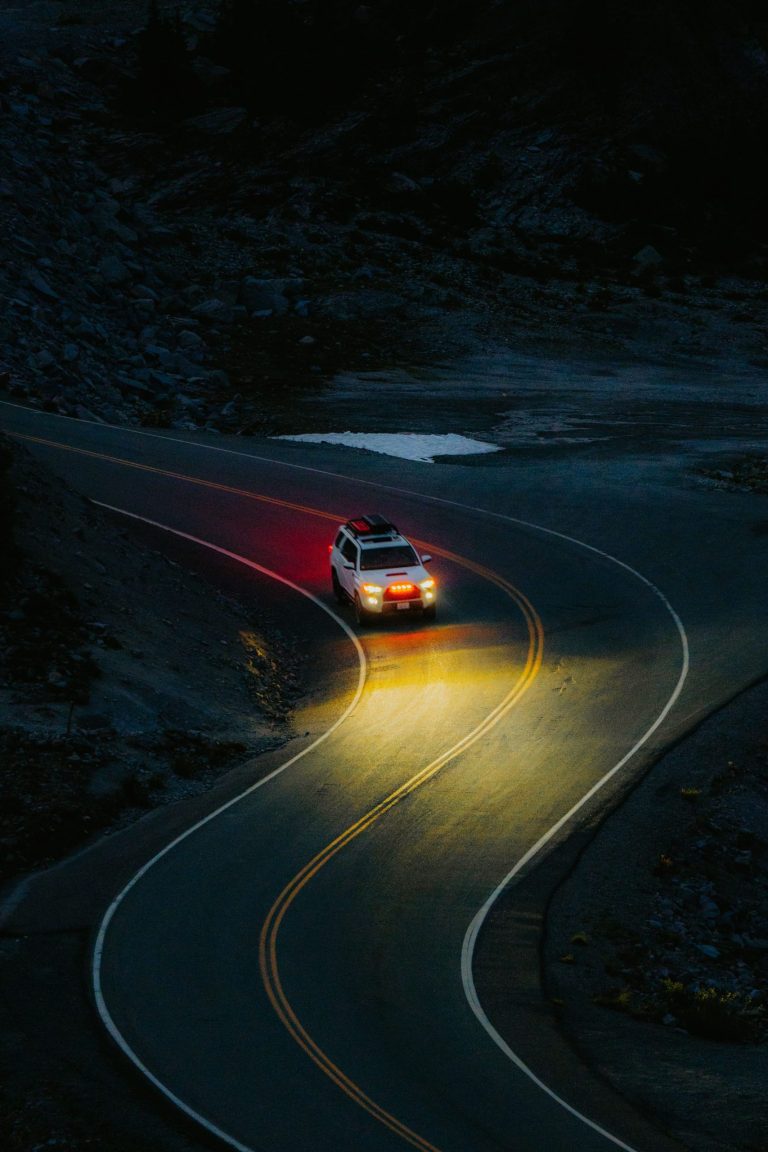
Night driving in this area has genuine value beyond ticking a box. Unlit stretches on the outskirts, headlight glare on wet roads, and the very different appearance of a familiar roundabout in the dark are all things you want to have experienced with someone beside you.
Months 7 to 8: Complexity and speed (target 75 cumulative hours, 13 at night)
Time for the harder environments. Motorway and arterial driving, merging at speed, heavier traffic, and unfamiliar suburbs where you cannot rely on memory.
Deliberately drive somewhere you do not know. Navigating an unfamiliar area while managing traffic is precisely what a driving test asks of you, and it is a skill that never develops if every drive follows the same three routes.
Months 9 to 10: Structured lessons and refinement (target 100 cumulative hours, 17 at night)
This is the optimal window for your block of professional lessons. You are competent enough that an instructor is not spending the hour on basics, but far enough from the test that there is still time to fix what they find.
Ten hours of structured lessons here gives you 30 log book hours and, more importantly, a diagnosis. Most learners at this stage have two or three persistent faults they are completely unaware of.
Months 11 to 12: Test conditions (target 120 hours, 20 at night)
Final phase. Everything now happens under conditions that resemble the assessment: the local test-route roads, at realistic times of day, with manoeuvres performed cold rather than after a warm-up.
Book a mock test around six weeks out. That leaves time to act on the feedback, and it converts vague confidence into a specific work list.
Making the Hours Happen
Attach driving to existing trips. The single most effective habit. Any journey a parent was going to make anyway is a journey the learner can drive. School runs, grocery trips, weekend visits.
Log immediately. Not at the end of the week. Reconstructed logbook entries are inaccurate and, if the discrepancy is obvious, they create problems at the counter on test day.
Vary the conditions deliberately. Rain, night, peak hour, empty Sunday roads, unfamiliar suburbs. A hundred and twenty hours on the same four streets produces a driver who is only safe on those four streets.
Rotate supervisors if you can. Different supervising drivers notice different things. A learner who has only ever driven with one parent tends to inherit that parent’s blind spots.
Keep sessions to a sensible length. Ninety minutes to two hours is about the limit of useful concentration for most learners. A four-hour session mostly logs fatigue.
What Not to Do
Do not treat 120 as a finish line. It is a legal minimum, not a measure of readiness. Plenty of learners are ready at 120 and plenty are not, and the number itself tells you nothing about which you are.
Do not inflate the log book. Beyond the obvious integrity problem, you are cheating yourself out of the practice that would have made the test straightforward.
Do not save all the difficult driving for the end. Confidence is built by encountering hard things gradually with support, not by meeting them all at once eight weeks before a test.
The Underlying Point
The 120-hour requirement exists because research consistently shows that supervised practice volume correlates with lower crash risk in the first years of solo driving. The hours are not bureaucratic. They are the mechanism by which driving stops being a sequence of conscious decisions and becomes something closer to instinct — which is exactly what frees up attention for the unexpected.
Treated as a chore, 120 hours is a grind. Planned properly, it is simply a year of getting where you were going anyway, with your hands on the wheel.
Turn Ten Hours into Thirty
Road Users Driving School is a NSW-licensed school based in Macquarie Fields, so every structured lesson with us counts as three log book hours under the 3-for-1 scheme. Our 30 logbook hours package covers ten hours of lessons plus the 20 bonus hours, with pick-up and drop-off from Macquarie Fields, Glenfield and Ingleburn.
Book online or call 0411 309 031 to talk through where you are up to.