

The New South Wales graduated licensing system takes most people the better part of four years to work through. It is deliberately slow, because the evidence is unambiguous that inexperienced drivers crash more, and that supervised experience is the most effective thing that reduces it.
Knowing the whole map in advance makes the journey considerably less frustrating. Here is the full sequence, with the practical detail that matters for learners in Macquarie Fields and the surrounding suburbs.
Stage One: The Learner Licence
You can apply for a learner licence from the age of sixteen. You will need to prove your identity, pass an eyesight check, and pass the Driver Knowledge Test — a computer-based test on road rules and safe driving.
The knowledge test catches more people than expected. It is not difficult, but it does require actually reading the handbook rather than relying on what you have absorbed from the passenger seat. Practice tests are free and widely available, and there is no reason to sit it unprepared.
Living with L plates
Once you hold a learner licence:
- You must display L plates clearly at the front and rear.
- You must be supervised at all times by a full licence holder.
- Zero blood alcohol concentration. No exceptions.
- No mobile phone use of any kind, including hands-free.
- Maximum speed of 90 km/h regardless of the posted limit.
- You must record every drive in your log book.
The 120 hours
Before you can attempt the driving test, you need 120 hours of supervised on-road driving recorded, including at least 20 hours at night. You must also have held the learner licence for a minimum period and be at least seventeen to sit the test.
The 3-for-1 concession is the lever worth understanding. Every one-hour structured lesson with a NSW-licensed instructor counts as three hours in your log book, up to a maximum of ten lessons. Ten hours of lessons therefore yields 30 log book hours.
The catch: for a lesson taken at night, only the actual hour driven counts toward your 20 night hours. The two bonus hours are credited as day hours.
Where the local advantage sits
Learners around Macquarie Fields, Glenfield and Ingleburn have unusually good access to the two things the log book most needs — quiet residential streets for early practice, and a dense network of roundabouts and junctions for the harder skills. The main planning error is leaving night hours until last, which is easily avoided by starting them in winter when sunset falls in the late afternoon.
Stage Two: The Driving Test
When the hours are complete and you are ready, you book a practical driving test. Locally, that will typically be at the Macquarie Fields Driver Testing Centre, on the ground floor of Building H at the Macquarie Fields TAFE campus on Victoria Road.
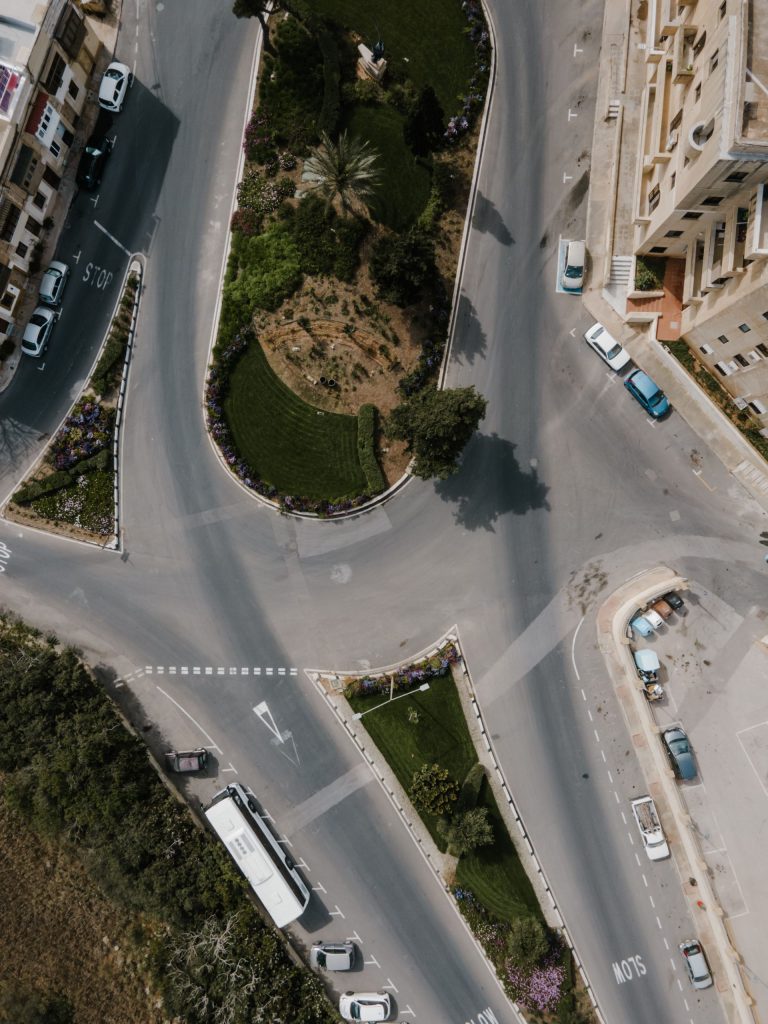
The test runs for roughly forty-five minutes over a route of around ten to twelve kilometres, assessing general driving plus set manoeuvres. Around this centre, expect a route heavy on roundabouts, with relatively few traffic signals, at least one school zone if you are testing near school start or finish times, and a section of faster arterial road.
You bring your own vehicle or hire one from a driving school. Whatever you use must be roadworthy and registered, and it will be checked before the test begins.
Pass rates at this centre sit around the halfway mark, which reflects the demanding local road environment rather than unusual severity from officers. Preparation targeted at local conditions moves those odds substantially.
Stage Three: P1 — The Red Ps
Pass and you receive a P1 provisional licence, which you must hold for at least twelve months.
The P1 restrictions are the tightest in the system, and they exist because the first year of solo driving is statistically the most dangerous period in any driver’s life.
- Red P plates displayed front and rear.
- Maximum speed of 90 km/h.
- Zero blood alcohol.
- No mobile phone use at all — not hands-free, not mounted.
- A reduced demerit point allowance, so a single serious offence can cost you the licence.
- Peer passenger restriction: if you are under 25, between 11pm and 5am you may generally carry only one passenger under the age of 21.
- Restrictions on driving certain high-performance vehicles.
The peer passenger rule is the one most commonly misunderstood and most commonly breached. It exists because the crash risk for a young driver rises sharply with each additional young passenger carried at night — an effect large enough that it shows up clearly in the data.
The first six months
This is the genuinely risky period, and it is worth taking seriously rather than treating the licence as a finish line.
New P1 drivers who continue to build experience deliberately — driving in rain, at night, on unfamiliar routes, in heavy traffic — consolidate their skills. Those who drive only the same three routes for a year remain effectively inexperienced everywhere else.
Stage Four: P2 — The Green Ps
After twelve months on P1, you progress to a P2 provisional licence, which you must hold for at least two years — longer if you incur a suspension during that time.
P2 conditions loosen somewhat:
- Green P plates front and rear.
- Maximum speed rises to 100 km/h.
- Zero blood alcohol still applies.
- No mobile phone use of any kind still applies.
- A slightly larger demerit point allowance than P1, but still well below a full licence.
- The night-time peer passenger restriction no longer applies.
The mobile phone prohibition catching P2 drivers out is worth flagging. Plenty of people assume that once they are on green Ps they can use a mounted phone for navigation. They cannot. The prohibition applies for the entire provisional period.
Stage Five: The Full Licence
After a minimum of three years on provisional licences — one on P1 and two on P2 — and provided you have not accrued suspensions that extend the period, you can move to a full unrestricted licence.
Full licence holders may drive at the posted limit, carry a blood alcohol concentration below 0.05, use a properly mounted phone for limited functions, and have the standard demerit point allowance.
The Demerit Point Trap
The most common way this timeline gets extended is demerit points.
Learner and provisional drivers operate on substantially reduced allowances. A single school zone speeding offence, or one instance of using a phone, can be enough to trigger a suspension for a P1 driver. A suspension during the P2 period extends how long you must hold P2 before progressing.
Double demerit periods over holiday weekends make this sharper still. A moment of inattention on an Easter long weekend can cost a provisional driver their licence outright.
A Realistic Timeline
For someone starting at sixteen:
- Age 16 — learner licence, begin log book
- Age 16 to 17 — 120 hours including 20 at night, with structured lessons for the 3-for-1 credit
- Age 17 — driving test, P1
- Age 18 — P2
- Age 20 — full licence
Four years from start to unrestricted. It feels slow at sixteen. It looks entirely sensible from the perspective of the crash statistics it was designed around.
Start the Journey Properly
Road Users Driving School has supported learners across Macquarie Fields, Glenfield and Ingleburn through every stage of this process. Structured lessons count as three log book hours under the 3-for-1 scheme, and our packages cover everything from a first introductory session to full test-day support with vehicle hire.
Please note that licensing rules and conditions can change — always confirm current requirements with Service NSW.
Book a lesson online or call 0411 309 031.