
There is a particular kind of silence that fills a car when a testing officer makes a note. Learners describe it the same way every time: they knew instantly what it was for, and they knew instantly that it was avoidable.
School zones produce more of those moments in south west Sydney than almost anything else. The corridor running from Glenfield through Macquarie Fields and down into Ingleburn is dense with primary and secondary schools, and the 40 km/h zones around them are active twice every school day. If your driving test is booked in the morning or mid-afternoon, you will pass through at least one of them.
The frustrating part is that nobody fails a school zone because they cannot drive. They fail because they were not looking for it.
How School Zones Actually Work in New South Wales
The standard school zone operating times in NSW are 8:00am to 9:30am and 2:30pm to 4:00pm on gazetted school days. Some zones operate on different hours, which is why the signage always states the times rather than assuming you know them.
Three things about that definition catch learners out.
“School days” does not mean “days when children are visible.” The zone is active on school days regardless of whether you can see a single student. Empty footpath, empty crossing, empty car park — the limit still applies. Learners routinely treat a deserted school frontage as evidence the zone is off. It is not.
The zone applies to the whole marked stretch, not just the school gate. School zones typically extend a considerable distance either side of the school entrance. Accelerating back to 50 or 60 the moment you pass the driveway is a very common and very marked error. The zone ends where the end-of-zone sign says it ends.
Many zones now have flashing lights, but not all do. Flashing amber lights are a helpful reminder where they exist. They are not the legal trigger and they are not universal. A driver who has learned to rely on lights will eventually meet a zone without them.
Why This Area Is Particularly Unforgiving
The suburbs around the Macquarie Fields testing centre have a specific street pattern that makes school zones easy to miss.
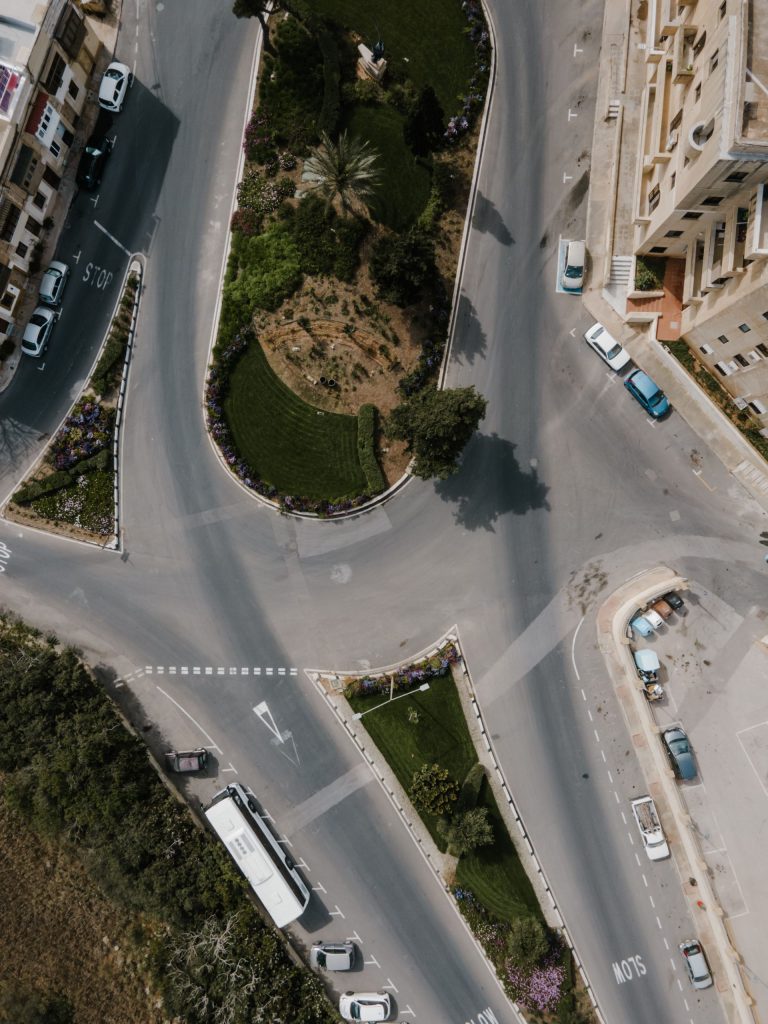
Much of the local residential network consists of curving streets with short sightlines, which means a zone sign can appear with less warning than it would on a long straight road. Several schools sit on or just off roads that also carry through traffic, so the transition from a 60 zone to a 40 zone happens while you are also managing merging traffic, parked cars and a roundabout.
Add the timing. School start and finish coincide almost exactly with the most popular driving test slots. A test booked at 8:45am or 3:00pm is very likely to intersect with an active zone, and it will do so while the surrounding streets are at their busiest — double-parked cars, children crossing mid-block, drivers reversing out of driveways without looking.
That combination is not an accident. Testing officers use these roads precisely because they generate genuine hazard-perception demands.
The Faults Officers Actually Record
Late deceleration. You are meant to be travelling at or below 40 km/h at the sign, not shortly after it. Braking as you pass the sign is a fault even if you were only over by a few kilometres per hour. Ease off the accelerator early and let the car slow itself.
Early acceleration. Equally common and equally marked. Speeding up before the end-of-zone sign, usually because the driver has judged by the school building rather than the signage.
Failing to give way at a children’s crossing. The flagged crossings outside many local schools require you to stop and remain stopped until every pedestrian has completely cleared the crossing — not until they have passed your side of the car. Moving off early is a serious fault and, on a busy morning, a genuine danger.
Poor scanning. Even at the correct speed, a driver who is staring straight ahead in an active school zone is not demonstrating adequate observation. Officers want to see your eyes moving — footpaths, gaps between parked cars, the crossing supervisor, the mirrors.
Overtaking a stopped school bus. Where a bus is displaying flashing lights and children are getting on or off, the speed limit past it drops sharply. Blowing past a school bus at 50 is one of the fastest routes to a failed test in this area.
Building the Habit So You Do Not Have to Think
The learners who never lose marks in school zones are not more vigilant by nature. They have converted vigilance into a habit that runs without conscious effort.
Know the times cold
8:00 to 9:30 and 2:30 to 4:00, school days. If you are driving in either of those windows on a weekday during term, your default assumption should be that any school you approach has an active zone. Assume active, and let the sign confirm it — never the reverse.
Learn the local schools by name
This is the piece of genuinely local knowledge that separates a prepared candidate from an unprepared one. If you know roughly where the schools sit along the roads between Macquarie Fields, Glenfield and Ingleburn, you are anticipating zones rather than reacting to them. Anticipation is smooth. Reaction is jerky, and jerky gets marked.
Drive the area on a weekend with a supervisor and simply note where the school zone signage is. You are not practising driving — you are building a map.
Use the environmental cues
Before the sign appears, the road tells you. A sudden cluster of parked cars in a residential street mid-morning. Painted line markings and a wombat crossing. Fluorescent vests. A queue of cars turning into a driveway. These cues arrive earlier than the signage does.
Say it out loud
In practice sessions, narrate: “school zone ahead, active, forty.” It feels ridiculous for about a week and then becomes automatic. Verbalising forces the observation from passive to active, which is exactly what the assessment is measuring.
What Happens if You Get It Wrong Outside a Test
It is worth knowing the stakes beyond the test. Speeding offences in school zones in New South Wales carry higher penalties and higher demerit point losses than the same offence elsewhere. For a learner or provisional driver on a restricted demerit point allowance, a single school zone offence can be enough to trigger a suspension.
For P1 drivers in particular, the margin is thin. A licence that took a year of logbook hours to earn can be suspended by one inattentive morning on Victoria Road.
The Broader Skill
School zones are worth taking seriously in their own right, but they are also a proxy for something larger. What the officer is really assessing is whether you read the road environment continuously or only react to what is directly in front of you.
A driver who consistently notices school zones is a driver who also notices the pedestrian about to step off a kerb, the car door opening on a parked vehicle, and the brake lights three cars ahead. That is the habit worth building, and school zones are simply the most measurable version of it.
Practise on the Roads You Will Be Tested On
Road Users Driving School operates out of Macquarie Fields and runs lessons through the local school zone corridors at the times they are actually active — because practising them at 11am on a Sunday teaches you nothing. Our instructors will show you the specific stretches on local test routes where learners most often lose marks, and drill the scanning habits that prevent it.
Book a lesson online or call 0411 309 031. Pick-up available across Macquarie Fields, Glenfield and Ingleburn.